
At a glance
- Choose stainless for brackets and housings exposed to moisture or frequent cleaning when corrosion resistance matters more than low weight or material cost.
- Choose aluminum when weight is a priority. Consider carbon steel for lower-cost parts in protected settings, with a coating if the part needs corrosion protection.
- Browse the stainless steel options for available grades, thicknesses, finishes, and bending specifications. Choose the material and services for your part in the online quote tool.
- Upload your model, configure your parts, and enter your quantities to get pricing online. Review the delivery estimate at checkout.
Stainless vs. aluminum vs. carbon steel for brackets and housings
Stainless steel is a sensible starting point for a bracket or housing exposed to moisture, frequent cleaning, or handling that could damage a coating. You can leave many stainless finishes unpainted, though the specific grade still needs to suit the environment. Salt and some cleaning chemicals can corrode stainless, so exposure details belong in the material decision.
Aluminum suits a weight-sensitive part when its grade and finish can meet the exposure requirements. For the same volume, it weighs much less than stainless or carbon steel, but a part may need a different thickness or shape to achieve the required stiffness. Anodizing can provide a consistent appearance and additional surface protection. For either metal, the alloy, thickness, and bend geometry affect how readily you can form the part.
Carbon steel can make sense for a bracket where weight matters less and a coating can protect the part. Its material cost may be lower than stainless, but painting or powder coating adds work and can change the total price. Stainless may cost more upfront. Springback varies with grade and thickness, so bending setups need to account for the specific material. Compare the finished part cost rather than sheet price alone.
Quick-reference material selection table
| Material | Corrosion exposure | Relative weight (same volume) | Typical finish | Forming | Cost position |
|---|---|---|---|---|---|
| Stainless steel | Resists many wet environments, depending on grade | Heavier than aluminum | Mill or brushed | Depends on grade and thickness | Often higher material cost |
| Aluminum | Resists many everyday exposures, but chemistry matters | Lightest of the three | Mill, anodized, or coated | Depends on alloy and temper | Varies by alloy and finish |
| Carbon steel | Usually needs protection against moisture | Similar to stainless | Painted or powder coated | Depends on grade and thickness | Often lower material cost, before coating |
- Stainless steel works well for brackets or housings exposed to frequent cleaning or moisture, provided the selected grade suits the environment.
- Aluminum works well for weight-sensitive brackets where its strength and exposure resistance meet the part’s requirements.
- Carbon steel works well for cost-sensitive structural parts when you can protect exposed surfaces against corrosion.
Material price alone will not determine the finished-part cost. Bends, coatings, and other required work also affect the quote.
Choosing a stainless grade for your part
A grade is a specific stainless steel alloy, such as 304 or 316. Your part’s exposure and finish requirements should guide that choice. A bracket exposed to salt spray or repeated cleaning may need a different grade than one used indoors. A visible housing may also need a specific surface finish. Browse our stainless steel options to compare grades, thicknesses, and finishes.
Each material listing includes bending specifications for that grade and thickness. Use its bend radius, minimum flange length, and maximum bend length when designing your part, then select that material in the quote tool.
Designing bends into your stainless part
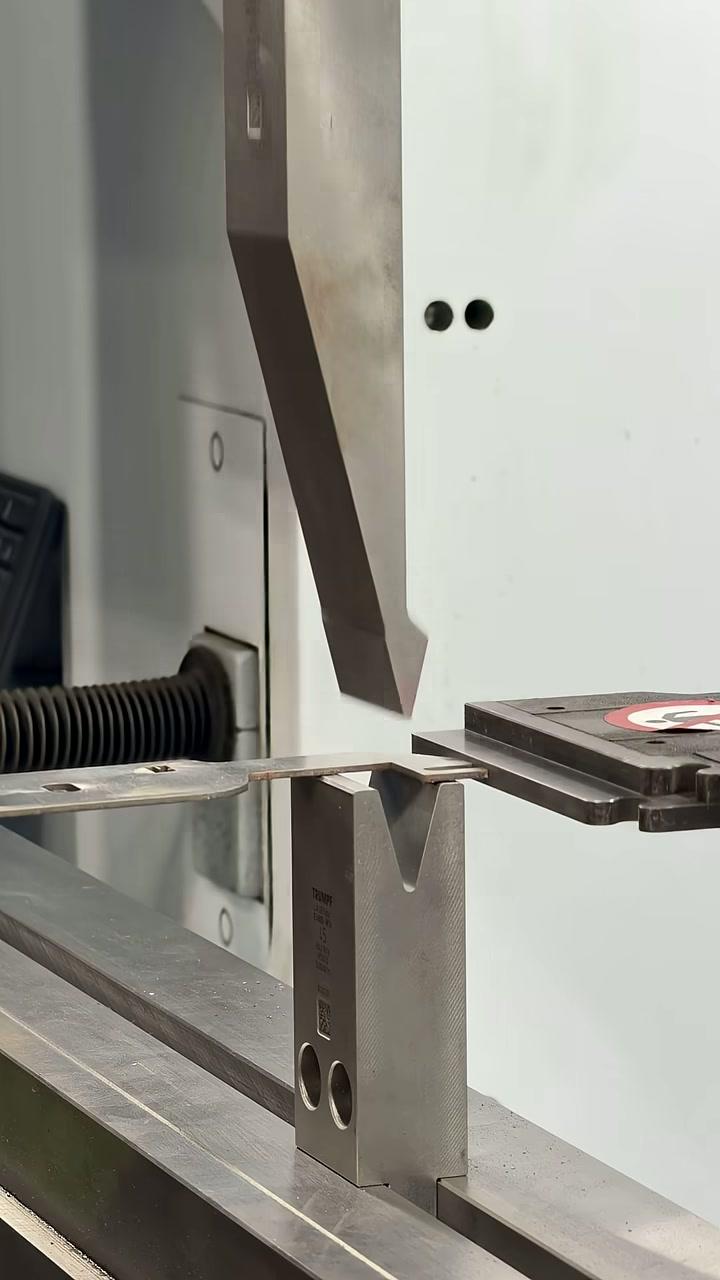
We form bends from 1° to 90°, measured from the original flat position. A 90° bend forms a right angle. Our current tooling does not support hems or bends past 90°. Our standard bending tolerances are ±1° for angle and ±0.015 inch for length. Design mating parts and clearances around those tolerances.
Check minimum flange length and maximum bend length before you finalize the model. A short flange may not span the die opening enough to form reliably, while a long bend may exceed the available equipment. Use the limits in your material listing and our bending guide to size these features.
Upload a STEP file with the bends modeled to see instant pricing and a 3D view of the part. Bend pricing uses quantity tiers, so enter the quantity you intend to order when you review the quote.
Adding welding and finishing online
We offer TIG welding for stainless steel and aluminum assemblies, and MIG welding for steel assemblies. Upload a STEP file of the assembly and annotate the welds in the quote tool. Pricing is calculated from your weld selections. Our welding guide covers joint design and available weld options.
For a coated part, select from the powder coating options in the quote tool. Our powder coating guide lists the minimum thicknesses and hanging-hole sizes. Configure the welds and coating you want included, then review the quoted configuration before checkout.
Getting your quote
Upload your STEP file to see instant pricing and a 3D visualization of your part. Choose the material, quantity, welding, and finishing options available for your design. Review your configured parts and the delivery estimate, then check out online.
FAQs
Can I mix materials in one assembly order? Yes. You can select a material for each part in your uploaded assembly. The online quote uses each part’s material and the operations you select.
How do I add welds to my assembly? Upload the assembly as a STEP file, then annotate the joints in the quote tool. The welding guide explains the available options, including stitch welds.
What if my grade or thickness is not listed? Browse the stainless steel options and materials catalog for an available alternative that meets your design requirements. Our online material selector shows the options you can order.
How are bend price breaks structured? Bend pricing uses quantity tiers. Enter different quantities for your modeled part to compare the resulting online prices.
What bending tolerances should I design around? Our standard bending tolerances are ±1° for angle and ±0.015 inch for length. Account for these in your fits and clearances, and refer to the bending guide for the full design requirements.
Can I order TIG welding and powder coating online? We offer TIG welding for stainless assemblies and online powder coating options. Annotate your welds and select an available coating in the quote tool. Our welding and powder coating guides cover joint design, minimum thickness, and hanging holes.
Ready to order?
Choose a material that meets your part’s requirements, check the published design guidelines, and configure the services you need online. Upload your design to get a price and place your order.
Sources and further reading
- RMFG bending guidelines: angle convention, tolerances, and design limits.
- RMFG stainless steel catalog: current material and tooling options.
- RMFG welding documentation and powder coating guidance: process and finish requirements.
- Outokumpu: corrosion resistance: why grade and exposure matter, including chloride-related pitting and crevice corrosion.
- Outokumpu: forming stainless steel: springback and grade-dependent forming behavior.
- Aluminum Anodizers Council: what is anodizing?: decorative and protective oxide finishes.
- European Aluminium: aluminium in commercial vehicles: density and stiffness comparisons with steel.